
NATO Crisis
The NATO Crisis deepened in 2026 with internal dissent and questions about burden-sharing, exacerbated by a US political figure's critical remarks and a review of troop deployments. While the alliance remains central to European security, these internal fissures highlight ongoing debates about its future role and the commitment of its members.
NATO, the cornerstone of Western security for decades, has faced persistent challenges in adapting to a changing global landscape. Debates over burden-sharing, the alliance's expansion, and its operational relevance in new threats have been ongoing. The resurgence of Russia as a perceived threat has revitalized NATO's purpose, yet internal disagreements, particularly regarding defense spending and strategic priorities, continue to test its cohesion.
2 events
Key facts
- Core Purpose
- Collective defense of member states
- Key Members
- US, Canada, UK, Germany, France, Turkey
- Current Focus
- Deterring Russian aggression, supporting Ukraine
- Internal Debates
- Burden-sharing, defense spending, strategic priorities
- Recent Developments
- US political criticism, troop deployment review
- Membership
- 32 member states (as of 2024)
Key milestones
North Atlantic Treaty signed, establishing NATO.
End of the Cold War leads to questions about NATO's purpose.
NATO expands eastward, admitting Poland, Hungary, and Czech Republic.
Russia's annexation of Crimea prompts renewed focus on collective defense.
US President Trump criticizes NATO members for insufficient defense spending.
Russia launches full-scale invasion of Ukraine, galvanizing NATO.
Finland and Sweden apply for NATO membership.
Finland becomes NATO's 31st member.
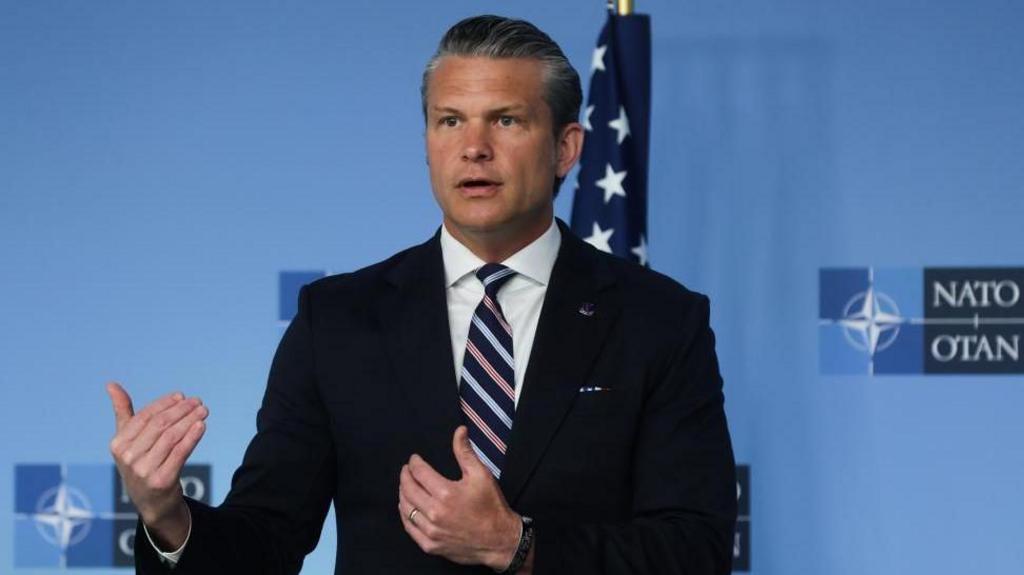
Pete Hegseth criticizes NATO allies, announces review of US forces in Europe.
Latest
Washington's sharp criticism of allies and a review of US force posture in Europe have unsettled the alliance and raised doubts about the reliability of the American security guarantee.
Pete Hegseth criticizes NATO allies, announces review of US forces in Europe
US Defense Secretary Pete Hegseth criticized NATO allies for 'free riding' and announced a review of US forces in Europe.
18 Jun 2026Economic impact
Renewed pressure on members to raise defense spending reopens long-running disputes over burden-sharing, with implications for national budgets across Europe.
National responses
European capitals are weighing how to respond to a less predictable US commitment, from boosting their own defense industries to debating greater strategic autonomy.
Analysis
Commentators see a structural test of whether the alliance can hold together under strain from within, including friction between Washington and individual leaders.
Transport impact
Logistics sit at the margin of this dispute, which plays out in defense budgets and alliance politics rather than in transport routes.
More coverage
The strain feeds a broader debate over European strategic autonomy and the future shape of transatlantic security.

Italian PM Meloni denies Trump's claim of begging for a photo
Italian Prime Minister Giorgia Meloni has publicly refuted claims made by former US President Donald Trump that she 'begged' him for a photo at the G7 summit, leading to a public exchange between the two leaders.
19 Jun 2026