
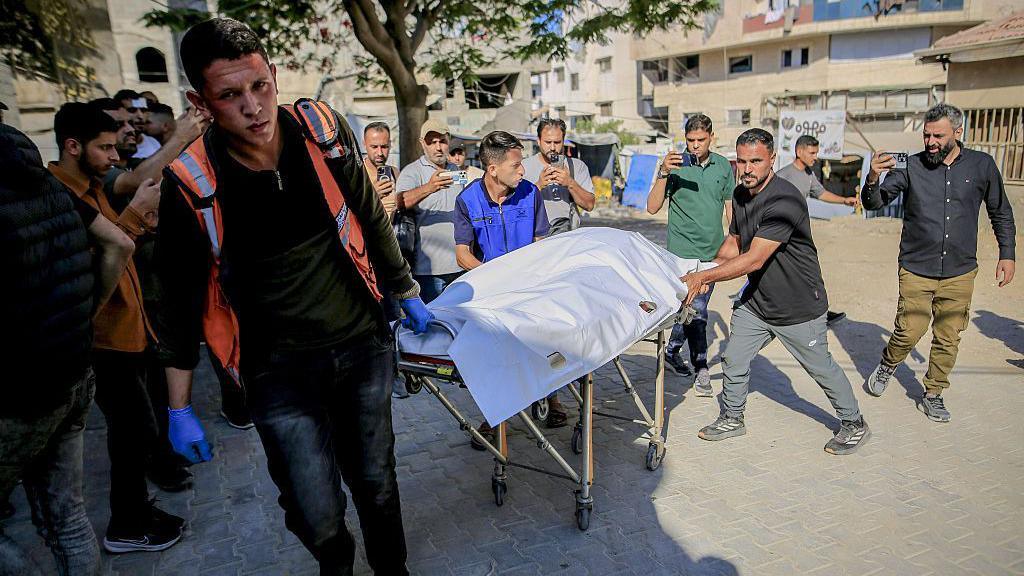
Lebanese conservationist killed by Israeli strike, escalating regional tensions
What happened
A Lebanese conservationist was killed by an Israeli strike, escalating regional tensions, while Al Jazeera cameraman Ahmed Wishah was also killed in Gaza.
How it developed
The region has been experiencing heightened tensions, with ongoing Israeli military actions and retaliatory responses, impacting civilian populations and infrastructure.
Mona Khalil, a Lebanese turtle conservationist, died after being injured in an Israeli strike.
Ahmed Wishah, an Al Jazeera cameraman, was killed by Israeli strikes in Gaza.
The Israeli military accused Wishah of being a 'Hamas sniper operative' without providing evidence.
Displaced Lebanese residents returned to inspect damage in Nabatieh after Israel halted attacks in southern Lebanon.
The Israeli Prime Minister vowed to continue troop presence in southern Lebanon, while Hezbollah demanded their withdrawal.
- Mona Khalil, a Lebanese conservationist, was killed by an Israeli strike.
- Ahmed Wishah, an Al Jazeera cameraman, was killed in Gaza by Israeli strikes.
- The events have contributed to escalating regional tensions.
Unstated assumptions
- •The Israeli military's accusations against the cameraman are being presented as fact by some outlets.
- •The deaths of civilians and journalists are viewed as significant escalations.
- •The regional actors involved are primarily Israel, Lebanon, and Gaza-based groups.
Whose voice is missing
- •Detailed accounts of the specific circumstances leading to Mona Khalil's death beyond the initial strike.
- •Independent verification of the Israeli military's claims about Ahmed Wishah.
- •The broader geopolitical context driving the recent Israeli military actions in southern Lebanon.
Reading guide:Start with BBC for a factual account of the casualties, including the accusation against the cameraman. Then read Al Jazeera for a more in-depth look at the victims and the impact on civilians, and finally, read Central News Agency for the political statements from regional leaders.